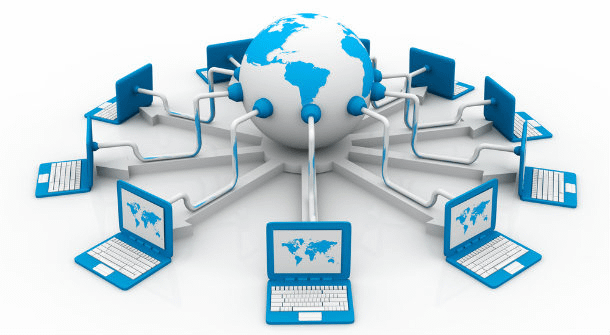
The Internet has revolutionized the way we communicate, learn, work, and entertain ourselves. It’s a behemoth network of networks that allows billions of devices across the globe to talk to each other. But have you ever wondered how a message magically travels across continents or how you can watch videos from creators halfway around the world? Let’s dive into the fascinating world of the Internet and networking.
The Building Blocks
- Devices: This is where it all starts and ends. Computers, smartphones, tablets, smart TVs, and a plethora of other devices make up the nodes of the network.
- Routers and Switches: These clever devices direct traffic. Routers connect networks together (like your home network to the wider world), while switches quickly route data within the same network.
- Cables and Wireless Signals: Information flows through physical wires (fiber-optic cables, copper cables) and invisibly through the air (WiFi, cellular networks, satellite communications).
- Internet Service Providers (ISPs): Your gateway to the Internet. ISPs provide your connection and manage the flow of traffic.
The Magical Protocols: A Language for Computers
The Internet functions thanks to agreed-upon rules called protocols. Two key ones are:
- Transmission Control Protocol (TCP): Breaks data into ‘packets’ for efficient transmission and ensures reliable delivery by checking if the packets all arrive at their destination.
- Internet Protocol (IP): Each device on the Internet has a unique IP address. IP is responsible for addressing and routing packets to the right place.
The Journey of a Data Packet
Let’s imagine you send an email to a friend overseas:
- Typing the Email: Your email client (software) formats the message and breaks it into ‘packets’ of data.
- Local Journey: Your router assigns the packets your computer’s IP address (sender) and your friend’s IP address (destination). It routes the packets through your home network to your ISP.
- Hopping Across Networks: Your ISP’s network directs the packets through a series of interconnected routers, potentially crossing oceans via undersea fiber-optic cables.
- Destination Reached: The packets reach your friend’s ISP, then their local router, and finally their computer.
- Reassembly: Their email client receives all the packets, reassembles the message into its original form and displays it on their screen.
The Amazing DNS System
Instead of memorizing strings of numbers for IP addresses, we use human-friendly domain names (like www.google.com). The Domain Name System (DNS) acts like a giant phonebook for the Internet:
- You Type: Enter a website address (www.example.com)
- DNS Lookup: Your computer queries a DNS server which translates the domain name into the corresponding numerical IP address.
- Connection Established: Your browser now has the address it needs to communicate with the website’s server and fetch the web page you requested.
Beyond the Basics
The Internet is a vast and complex ecosystem. Here are some additional concepts worth understanding:
- Firewalls: Security gatekeepers that filter traffic, blocking malicious requests to protect networks and devices.
- Network Speeds: Measured in bits per second (e.g., megabits per second – Mbps). Faster means more data quicker (crucial for streaming and large downloads).
- Latency: A slight delay between sending data and it being received. High latency can cause stuttering in gaming or video calls.
- The World Wide Web: Important distinction! WWW is a service built on top of the Internet, allowing us to view websites using web browsers.
- The Cloud: Remote computing and storage. Instead of storing files locally, they live on servers accessible via the Internet.
Maintaining a Network: Home & Beyond
Whether it’s your home setup or the entire Internet, these principles apply:
- Security: Firewalls, antivirus software, and strong passwords are essential.
- Troubleshooting: The ability to diagnose basic network issues (like checking connectivity and resetting the router) is valuable.
- Large-Scale Management: Network engineers monitor the health of massive networks, ensuring smooth global communication.
The Internet Connects Us
The Internet has fundamentally transformed the world, opening up endless possibilities for communication, education, creativity, and commerce. By understanding its basic structure, you’ll gain a deeper appreciation for this technological marvel that has become an integral part of our lives.
About the Author