Smart home security has moved far beyond the old alarm box on the wall. In 2026, a good home security system can watch your front door, detect motion, alert you when a window opens, record visitors, warn you about smoke or leaks, and let you control everything from your phone. For homeowners, renters, families, landlords, and frequent travellers, this has made home protection more practical and more flexible than ever.
But the choice is not always simple. Some systems are designed for people who want professional installation and 24/7 monitoring. Others are better for users who prefer a do-it-yourself setup with no long-term contract. Some focus heavily on cameras, while others offer full alarm systems with sensors, sirens, emergency response options, and smart home integration.
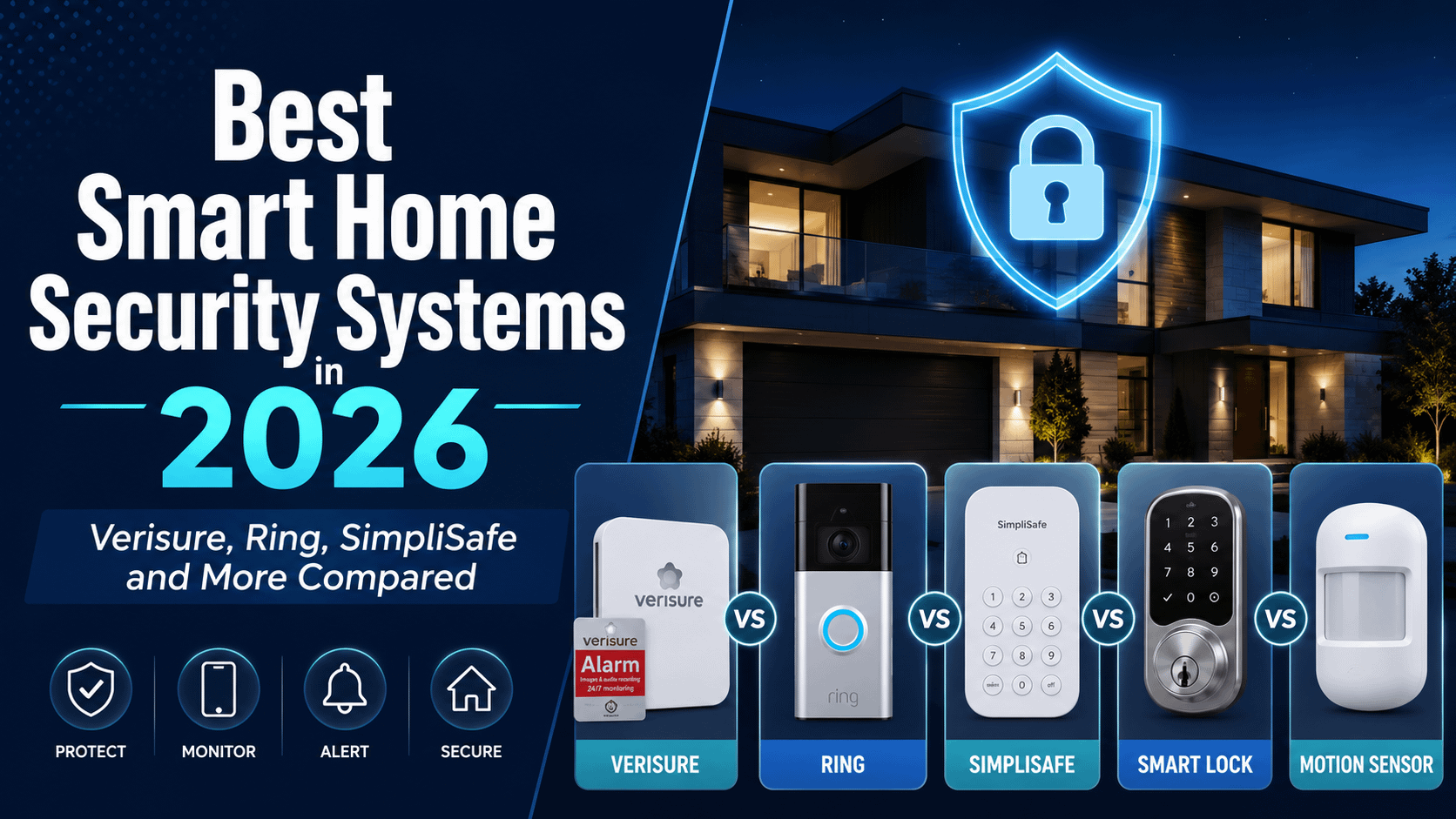
In this guide, we compare some of the best smart home security systems in 2026, including Verisure, Ring, SimpliSafe, Arlo, Yale, and Eufy. The goal is to help you understand which one is best for your home, budget, and level of security needs.
What Makes a Good Smart Home Security System?
Before choosing a system, it helps to know what actually matters. The best smart security setup is not always the one with the most expensive camera or the longest list of features. It is the one that fits your lifestyle and protects the areas of your home that matter most.
A strong smart home security system should offer reliable alerts, easy installation, mobile app control, good camera quality, useful sensors, and clear pricing. If you want extra peace of mind, professional monitoring can also be important. This means a monitoring team may be able to respond when your alarm is triggered, depending on the provider and plan.
You should also think about whether you own or rent your home. Renters may prefer wireless systems that can be removed easily, while homeowners may be more comfortable with professionally installed alarms, outdoor cameras, and fixed sensors.
1. Verisure: Best for Professional Monitoring and Full-Service Protection
Verisure is one of the strongest options for people who want a professionally monitored security system rather than a simple DIY camera setup. It is especially suitable for homeowners, families, and users who want a security company to handle installation, monitoring, and emergency response support.
The biggest advantage of Verisure is its full-service approach. Instead of buying random devices and trying to connect them yourself, Verisure usually provides a tailored security package based on your property. This can include motion detectors, door and window sensors, cameras, smart alarms, key fobs, panic buttons, and a monitored alarm system.
Verisure is a good choice if you want serious protection and do not mind paying more for it. The system is designed for people who value professional support and fast response more than cheap upfront pricing. It is also a strong option for people who travel often or leave their home empty for long periods.
However, Verisure may not be the best fit for everyone. Pricing can depend on the package, property size, and monitoring plan, so it is not always as transparent as simple DIY systems. If you only need one camera or a basic doorbell, Verisure may feel like more than you need.
Best for:
- Homeowners who want professional monitoring
- Families looking for full-property protection
- People who prefer expert installation
- Users who want a premium security service
2. Ring: Best for Video Doorbells and Camera-Based Security
Ring is one of the most recognizable names in smart home security, especially for video doorbells and outdoor cameras. If your main goal is to see who is at the door, monitor your driveway, or keep an eye on deliveries, Ring is one of the easiest brands to recommend.
The Ring ecosystem includes video doorbells, indoor cameras, outdoor cameras, floodlight cameras, alarm systems, sensors, and smart lighting. Everything is controlled through the Ring app, making it simple to check live video, receive motion alerts, and review recorded events if you have a suitable subscription plan.
One of Ring’s biggest strengths is convenience. It is widely available, easy to install, and works well for people who want a practical camera-first security system. It is also a good option if you already use Amazon Alexa, since Ring products fit naturally into the Amazon smart home ecosystem.
Ring is not perfect, though. Many of its best features depend on a subscription, especially if you want video history and more advanced alerts. Also, while Ring cameras are useful for visibility and deterrence, a camera-based setup may not feel as complete as a professionally monitored alarm system unless you add Ring Alarm sensors and other accessories.
Best for:
- Video doorbells
- Outdoor cameras
- Amazon Alexa users
- People who want simple app-based monitoring
3. SimpliSafe: Best DIY Alarm System for Most Homes
SimpliSafe is a strong choice for users who want a proper home alarm system without the complexity of traditional security companies. It is built around simple installation, flexible equipment, and optional monitoring. That makes it attractive for both homeowners and renters.
The system can include a base station, keypad, entry sensors, motion sensors, indoor cameras, outdoor cameras, glass break sensors, panic buttons, smoke detectors, water sensors, and other accessories. You can start small and expand over time, which is helpful if you do not want to spend too much upfront.
One of the main reasons people like SimpliSafe is that it feels approachable. You do not need to be very technical to install it, and you can usually build a system around your exact home layout. For example, a small apartment may only need a few entry sensors and a camera, while a larger home may need multiple sensors, sirens, and outdoor cameras.
SimpliSafe is also appealing because it offers a balance between affordability and serious protection. It is usually less intimidating than a fully professional system but more complete than buying a single camera. For many people, this middle ground is exactly what they need.
Best for:
- DIY home security
- Renters and homeowners
- Flexible alarm packages
- People who want to avoid complicated installation
4. Arlo: Best for High-Quality Security Cameras
Arlo is best known for its wireless security cameras. If camera quality is your top priority, Arlo deserves a place on your shortlist. Its cameras are often popular with users who want sharp video, outdoor monitoring, smart alerts, and flexible placement.
Arlo cameras are useful for monitoring entrances, gardens, driveways, garages, and other areas where wiring may be inconvenient. Many Arlo devices are battery-powered, which makes installation easier. The Arlo app also allows users to manage cameras, receive alerts, and check live video from a phone.
Arlo is a particularly good fit for people who want a camera-focused security setup rather than a full alarm system. It can be useful for houses, flats, small offices, and rental properties. The brand is also worth considering if you want smart detection features that can help distinguish between people, vehicles, animals, and general motion, depending on the device and subscription.
The downside is that Arlo can become expensive, especially if you need multiple cameras and a subscription plan for cloud recording or advanced features. It is excellent for video monitoring, but users who want a full alarm system may still need to combine it with other products.
Best for:
- Wireless security cameras
- Outdoor monitoring
- Driveways and gardens
- Users who prioritize video quality
5. Yale Smart Security: Best for Locks and Traditional Home Security Brands
Yale is a familiar name in home security, especially for locks. In the smart home era, Yale has expanded into smart locks, alarms, cameras, and connected security products. This makes it a good option for people who trust established home security brands but still want modern app-based control.
Yale smart locks are especially useful if you want keyless entry, temporary access codes, or better control over who can enter your property. This can be helpful for families, Airbnb hosts, landlords, cleaners, or anyone who regularly gives access to others.
Yale’s security ecosystem may not feel as flashy as some newer tech-first brands, but it has a practical advantage: it focuses on real-world home access and physical security. For many users, combining a smart lock with cameras and sensors creates a useful security foundation.
Yale is a good choice if your main concern is controlling doors and entry points. However, if you want advanced camera intelligence or a very polished app experience, you may prefer Ring, Arlo, or SimpliSafe.
Best for:
- Smart locks
- Keyless entry
- Landlords and rental properties
- Users who trust traditional security brands
6. Eufy Security: Best for Local Storage and No-Monthly-Fee Users
Eufy Security is a popular choice for people who want smart cameras and home security devices without being forced into heavy monthly subscriptions. One of its biggest selling points is local storage on many products, which can reduce the need for ongoing cloud storage fees.
Eufy offers video doorbells, indoor cameras, outdoor cameras, floodlight cameras, smart locks, and alarm-style accessories. The products are generally designed to be easy to install and manage through a mobile app.
For budget-conscious users, Eufy can be very attractive. You can build a useful smart security setup without committing to expensive monthly plans. This makes it a strong option for apartments, small homes, and users who mainly want cameras and alerts.
The main trade-off is that Eufy may not offer the same level of professional monitoring or emergency response as more service-led companies. It is best for self-monitoring users who are comfortable checking alerts and managing their own system.
Best for:
- Local video storage
- Reducing monthly fees
- Budget-friendly smart cameras
- Self-monitoring users
Quick Comparison: Which Smart Security System Should You Choose?
| Security System | Best For | Main Strength | Potential Drawback |
|---|---|---|---|
| Verisure | Full-service protection | Professional monitoring and installation | Can be more expensive |
| Ring | Doorbells and cameras | Easy video monitoring | Best features may need subscription |
| SimpliSafe | DIY alarm systems | Flexible and easy to expand | Some features require monitoring plan |
| Arlo | High-quality cameras | Strong wireless camera options | Can be costly with multiple cameras |
| Yale | Smart locks and entry control | Trusted lock and access solutions | Less camera-focused than rivals |
| Eufy | No-monthly-fee security | Local storage and good value | Less focused on professional monitoring |
Final Verdict: The Best Smart Home Security System in 2026
The best smart home security system depends on what you need most. If you want premium protection with professional monitoring, Verisure is one of the strongest choices. It is ideal for people who want a serious home security service and prefer expert installation.
If you want a simple camera-first system, Ring is one of the easiest options to use, especially for video doorbells and outdoor monitoring. For people already using Amazon Alexa, Ring fits naturally into the smart home setup.
If you want the best balance between affordability, flexibility, and proper alarm protection, SimpliSafe is probably the best option for most everyday users. It is easy to install, expandable, and suitable for both renters and homeowners.
Arlo is the better choice if your main priority is high-quality wireless cameras. Yale is excellent if you care most about smart locks and entry control. Eufy is a smart pick if you want useful security features without relying heavily on monthly subscriptions.
For most people, the best approach is to start with your biggest security concern. If you worry about break-ins, choose a full alarm system with sensors. If you worry about packages or visitors, start with a smart doorbell. If you travel often, consider cameras, motion alerts, and professional monitoring. A good smart security system should make your home feel safer without making your life more complicated.
About the Author